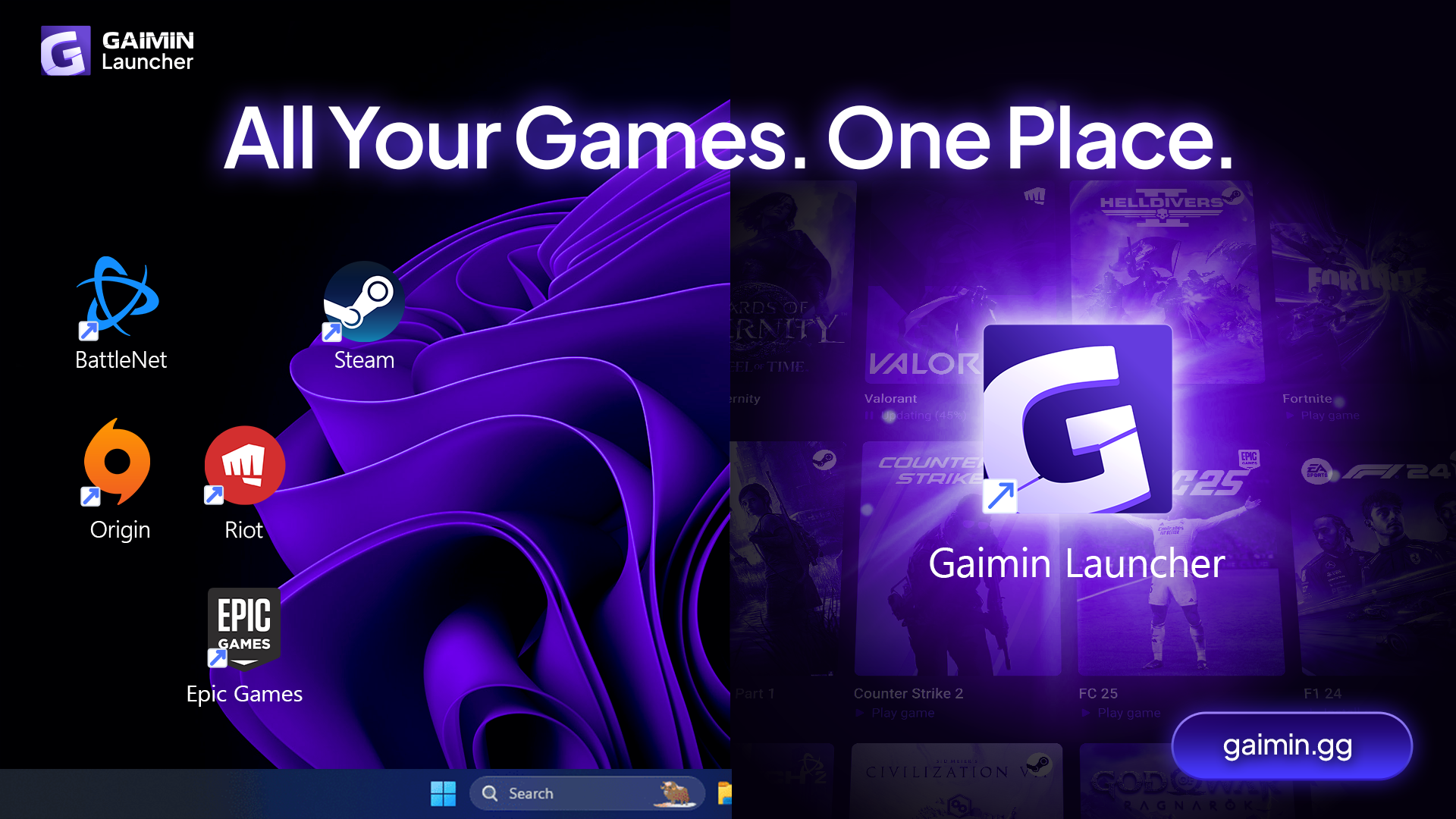
How many game launchers do you have installed right now? If you're like most PC gamers, the answer is probably "too many." Your desktop likely hosts Steam, Epic Games Store, Origin, Battle.net, GOG Galaxy, and maybe a few others you've forgotten about. What started as a simple way to play games has evolved into a complex juggling act that can feel more like system administration than entertainment.
The reality is that modern PC gaming has become fragmented in ways that would have seemed absurd a decade ago. You might own Cyberpunk 2077 on GOG, Fortnite on Epic, Battlefield on Origin, and your Steam library with hundreds of titles. Each platform demands its own updates, has its own friends list, and runs its own background processes. For casual gamers who just want to unwind after work, this ecosystem can feel unnecessarily complicated.
The proliferation of launchers and services has created a fragmented ecosystem that can be frustrating for players to navigate. What began as healthy competition between digital distribution platforms has resulted in an environment where gamers bear the complexity cost. Each launcher consumes system resources, requires separate account management, and fragments your gaming social experience across multiple platforms.
Consider the typical gaming session: you remember wanting to play that game you bought months ago, but can't recall which launcher it's on. You spend several minutes checking different platforms, updating whichever launcher you haven't opened recently, and potentially discovering that your friends are online in a different ecosystem entirely. This friction transforms what should be immediate entertainment into a technical obstacle course.
The situation becomes more complex when you factor in exclusive releases, limited-time free games, and platform-specific features. Players often feel compelled to maintain accounts across multiple services to avoid missing out, creating a subscription fatigue effect even for free platforms. According to recent gaming industry analysis, players are experiencing subscription fatigue and expressing a desire for more consolidated and unified gaming experiences.
The current launcher landscape didn't emerge by accident; it's the result of business strategies that prioritize platform control over user experience. Major publishers like EA, Ubisoft, and Activision Blizzard created their own launchers to maintain direct relationships with customers and avoid revenue-sharing with third-party platforms. Meanwhile, Epic Games Store entered the market with exclusive releases and free weekly games, forcing players to adopt yet another platform.
This fragmentation serves corporate interests but creates genuine usability problems for players. Each platform develops its own interface conventions, social features, and technical requirements. Some launchers are resource-heavy, others have reliability issues, and most lack meaningful integration with competitors. The result is an ecosystem designed around business competition rather than user convenience.
For casual gamers, especially, this complexity can be a significant barrier. Unlike enthusiasts who might enjoy tinkering with different platforms, casual players typically want gaming to be as frictionless as possible. They're not interested in learning multiple interfaces or managing several friend lists; they want to click a game and play.
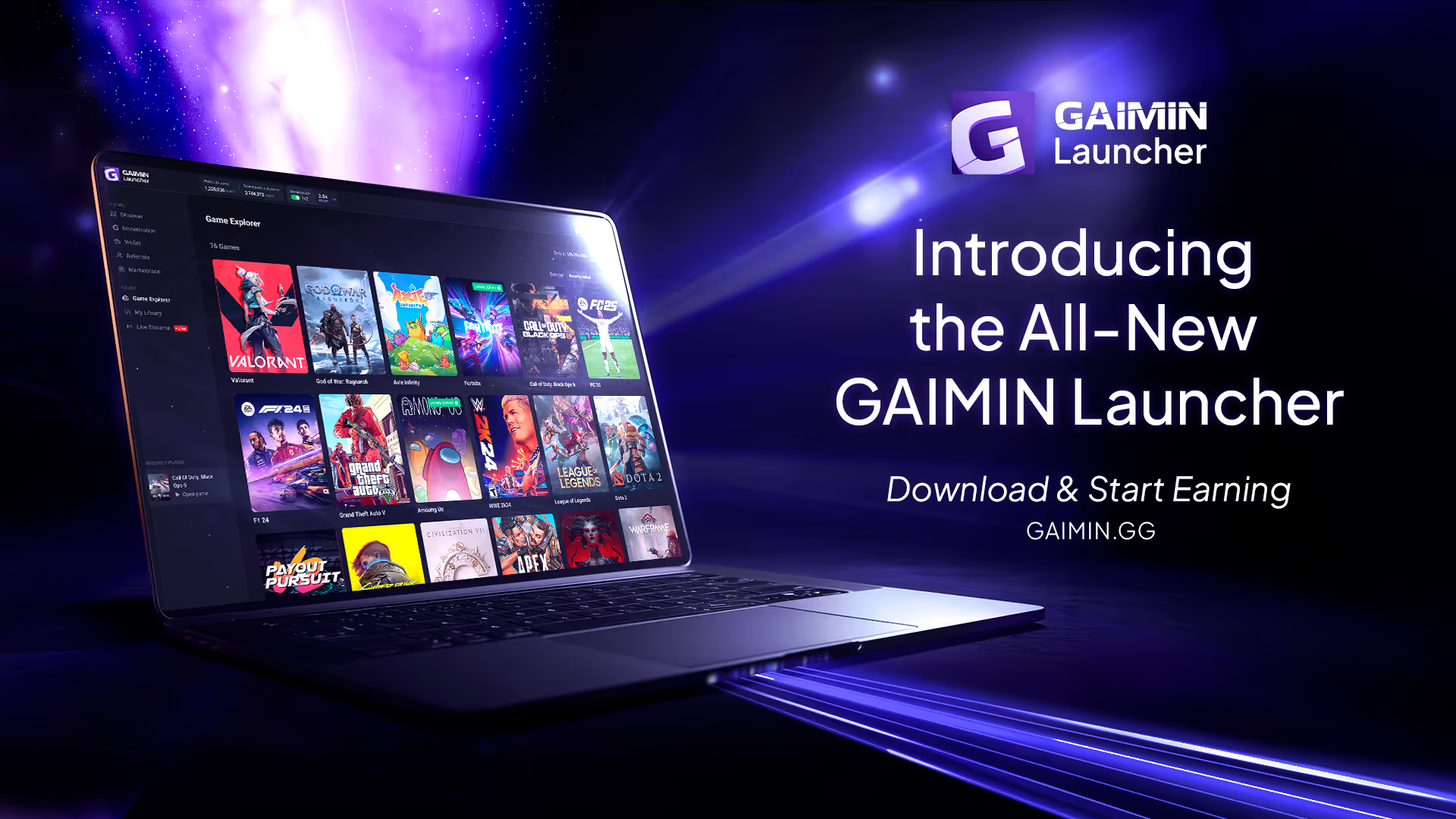
A unified game launcher addresses these pain points by providing a single interface for managing games across multiple platforms. Instead of replacing existing launchers entirely, the best unified solutions integrate with them, allowing you to see your complete game library in one place while maintaining compatibility with existing purchases and social connections.
The benefits extend beyond simple convenience. A well-designed unified launcher can reduce system resource usage by minimizing background processes, provide better game discovery across your entire library, and offer consistent performance monitoring regardless of which platform a game originated from. For players with large libraries spanning multiple platforms, this consolidation can significantly improve the gaming experience.
However, it's important to approach unified launchers with realistic expectations. They can't eliminate platform exclusivity or completely replace native launchers for all functions. What they can do is reduce the daily friction of managing multiple gaming platforms while preserving access to your existing game collections.
GAIMIN positions itself differently from traditional game launchers by focusing on unification rather than competition. Instead of trying to become another exclusive platform, GAIMIN works as a layer that sits above existing launchers, providing a consolidated view of your gaming library while maintaining compatibility with Steam, Epic Games Store, and other platforms you already use.
The platform addresses launcher fatigue by reducing the number of applications you need to interact with daily. Your games remain where you purchased them, but you can launch and organize them through a single interface. This approach respects your existing investments while simplifying the experience of managing a multi-platform library.
What distinguishes GAIMIN from simple library organizers is its integration with reward systems. The platform can track your gaming activity across different titles and platforms, allowing you to earn rewards for the time you're already spending gaming. This monetization happens in the background through the Orbon Cloud infrastructure, which utilizes unused system resources during gaming sessions.
The technical foundation provided by Orbon Cloud also addresses common concerns about performance impact. Rather than adding overhead to your gaming experience, the system is designed to operate efficiently in the background, potentially offsetting its resource usage through distributed computing contributions.
It's natural to be cautious about installing another piece of gaming software, especially one that promises to solve problems created by too much software in the first place. The key questions most players have revolve around performance impact, security, and whether unified launchers actually deliver on their promises.
Regarding performance, GAIMIN is designed to work alongside existing launchers rather than replacing them entirely. This means your games still benefit from native platform optimizations while gaining the convenience of centralized management. The background reward system is engineered to use only spare system resources, similar to how modern antivirus software operates without impacting gaming performance.
Security concerns are addressed through integration rather than replacement. Since GAIMIN connects to your existing platform accounts rather than requiring you to move games or recreate libraries, your existing security settings and two-factor authentication remain in place. The platform doesn't need access to payment information or personal data beyond what's necessary for library integration.
The "another launcher" concern is perhaps the most valid, but GAIMIN's approach is fundamentally different from traditional launchers. Rather than creating another silo, it's designed to reduce the number of applications you need to actively manage while gaming.
Transitioning to a unified launcher doesn't require abandoning your existing setup. GAIMIN integrates with your current platforms, meaning your Steam friends, Epic achievements, and GOG library remain accessible. The initial setup involves connecting your existing accounts, after which the platform can provide a consolidated view of your gaming ecosystem.
The reward system operates transparently in the background, allowing you to earn from gaming time without changing how you play. These rewards can be used within the GAIMIN ecosystem or converted through the GAIMIN Deals marketplace, providing tangible value for activity you're already engaged in.
For casual gamers, especially, the value proposition centers on simplification rather than additional features. Instead of managing multiple launcher updates, friend lists, and interfaces, you can access your complete gaming library through a single, consistent interface while potentially earning rewards for your time.
The platform also addresses game discovery across your entire library. Instead of browsing separate stores to remember what you own, you can see your complete collection organized by genre, playtime, or any other criteria that make sense for your gaming habits.
The fragmented launcher landscape isn't going to consolidate naturally; if anything, it's likely to become more complex as new platforms emerge and existing ones expand their exclusive content. For players tired of managing multiple gaming applications, a unified approach offers a practical solution that works with existing investments rather than requiring a complete platform migration.
GAIMIN represents a different philosophy in gaming platform design: instead of competing for exclusivity, it focuses on improving the experience of managing the platforms you already use. The reward system provides additional value for the time you're already spending, while the unified interface reduces the daily friction of multi-platform gaming.
If you're ready to consolidate your gaming experience and explore whether a unified approach fits your setup, you can simplify your gaming life with the GAIMIN Launcher. The platform is designed to work alongside your existing library, so you can evaluate its benefits without disrupting your current gaming routine.
[Reference: https://www.globenewswire.com/news-release/2026/02/09/3234752/0/en/North-America-Gaming-Analysis-Report-2026-A-120-Billion-Market-by-2031-Driven-by-Subscription-Services-Gaining-ARPU-via-Price-Tier-Stacking-and-Surge-in-Mobile-First-Casual-Gaming-.html]